'%3e%3cpath%20fill-rule='evenodd'%20clip-rule='evenodd'%20d='M4.78913%2017.7017C3.6351%2020.5765%203%2023.7147%203%2027C3%2038.9548%2011.4092%2048.9609%2022.63%2051.4209C24.36%2051.8001%2026.1568%2052%2028%2052C29.8431%2052%2031.64%2051.8001%2033.37%2051.4209C36.0675%2047.4302%2037.6433%2042.6203%2037.6433%2037.4453C37.6433%2035.4696%2037.4136%2033.547%2036.9795%2031.703C36.2821%2028.7405%2035.0571%2025.9806%2033.4093%2023.5281C34.0408%2024.5209%2034.4067%2025.6988%2034.4067%2026.9616C34.4067%2030.4972%2031.538%2033.368%2028.0033%2033.3715H27.9968H27.9873C24.827%2033.3715%2021.8029%2032.7839%2019.0184%2031.712C12.5509%2029.2223%207.37594%2024.1203%204.78913%2017.7017Z'%20fill='url(%23paint0_linear_331_327)'/%3e%3cpath%20fill-rule='evenodd'%20clip-rule='evenodd'%20d='M7.27324%2013.0244C6.28825%2014.4816%205.45281%2016.0481%204.78906%2017.7016C7.37588%2024.1203%2012.5509%2029.2223%2019.0183%2031.7119C21.8028%2032.7839%2024.8269%2033.3715%2027.9872%2033.3715C24.4538%2033.3664%2021.5867%2030.4961%2021.5867%2026.9616C21.5867%2025.7554%2021.9206%2024.6266%2022.5008%2023.6626C22.6297%2023.4486%2022.7706%2023.2427%2022.9228%2023.0459C24.3454%2021.0318%2026.0581%2019.2369%2027.9999%2017.7223C32.2388%2014.416%2037.5694%2012.4453%2043.3566%2012.4453C45.1998%2012.4453%2046.9966%2012.6452%2048.7266%2013.0244C44.2319%206.375%2036.6228%202%2027.9999%202C19.3771%202%2011.768%206.375%207.27324%2013.0244Z'%20fill='url(%23paint1_linear_331_327)'/%3e%3cpath%20fill-rule='evenodd'%20clip-rule='evenodd'%20d='M33.3699%2051.4209C44.5907%2048.9609%2052.9999%2038.9548%2052.9999%2027.0001C52.9999%2023.7026%2052.3602%2020.5534%2051.1981%2017.67C50.5364%2016.0281%2049.7053%2014.4724%2048.7266%2013.0245C46.9966%2012.6452%2045.1998%2012.4453%2043.3567%2012.4453C37.5694%2012.4453%2032.2388%2014.416%2027.9999%2017.7224C26.0581%2019.237%2024.3454%2021.0318%2022.9229%2023.0459C24.0956%2021.5291%2025.9329%2020.5517%2027.9967%2020.5517C30.1165%2020.5517%2031.9972%2021.5828%2033.1645%2023.1705C33.2499%2023.2868%2033.3316%2023.4061%2033.4092%2023.5281C35.0571%2025.9807%2036.282%2028.7405%2036.9794%2031.703C37.4136%2033.5471%2037.6432%2035.4696%2037.6432%2037.4453C37.6432%2042.6204%2036.0675%2047.4302%2033.3699%2051.4209Z'%20fill='url(%23paint2_linear_331_327)'/%3e%3c/g%3e%3cdefs%3e%3cfilter%20id='filter0_d_331_327'%20x='0'%20y='0'%20width='56'%20height='56'%20filterUnits='userSpaceOnUse'%20color-interpolation-filters='sRGB'%3e%3cfeFlood%20flood-opacity='0'%20result='BackgroundImageFix'/%3e%3cfeColorMatrix%20in='SourceAlpha'%20type='matrix'%20values='0%200%200%200%200%200%200%200%200%200%200%200%200%200%200%200%200%200%20127%200'%20result='hardAlpha'/%3e%3cfeOffset%20dy='1'/%3e%3cfeGaussianBlur%20stdDeviation='1.5'/%3e%3cfeComposite%20in2='hardAlpha'%20operator='out'/%3e%3cfeColorMatrix%20type='matrix'%20values='0%200%200%200%200%200%200%200%200%200%200%200%200%200%200%200%200%200%200.25%200'/%3e%3cfeBlend%20mode='normal'%20in2='BackgroundImageFix'%20result='effect1_dropShadow_331_327'/%3e%3cfeBlend%20mode='normal'%20in='SourceGraphic'%20in2='effect1_dropShadow_331_327'%20result='shape'/%3e%3c/filter%3e%3clinearGradient%20id='paint0_linear_331_327'%20x1='6.57855'%20y1='29.8278'%20x2='34.4067'%20y2='42.0556'%20gradientUnits='userSpaceOnUse'%3e%3cstop%20stop-color='%231E2E41'/%3e%3cstop%20offset='0.5'%20stop-color='%23235B82'/%3e%3cstop%20offset='1'%20stop-color='%23B4ECFF'/%3e%3c/linearGradient%3e%3clinearGradient%20id='paint1_linear_331_327'%20x1='41'%20y1='8'%20x2='13.0644'%20y2='24.2703'%20gradientUnits='userSpaceOnUse'%3e%3cstop%20stop-color='%231E2E41'%20stop-opacity='0.2'/%3e%3cstop%20offset='0.5'%20stop-color='%23235B82'/%3e%3cstop%20offset='1'%20stop-color='%23B4ECFF'/%3e%3c/linearGradient%3e%3clinearGradient%20id='paint2_linear_331_327'%20x1='39.9539'%20y1='47.5325'%20x2='40.9481'%20y2='17.6858'%20gradientUnits='userSpaceOnUse'%3e%3cstop%20stop-color='%231E2D40'/%3e%3cstop%20offset='0.5'%20stop-color='%23235B82'/%3e%3cstop%20offset='1'%20stop-color='%23B4ECFF'/%3e%3c/linearGradient%3e%3c/defs%3e%3c/svg%3e)
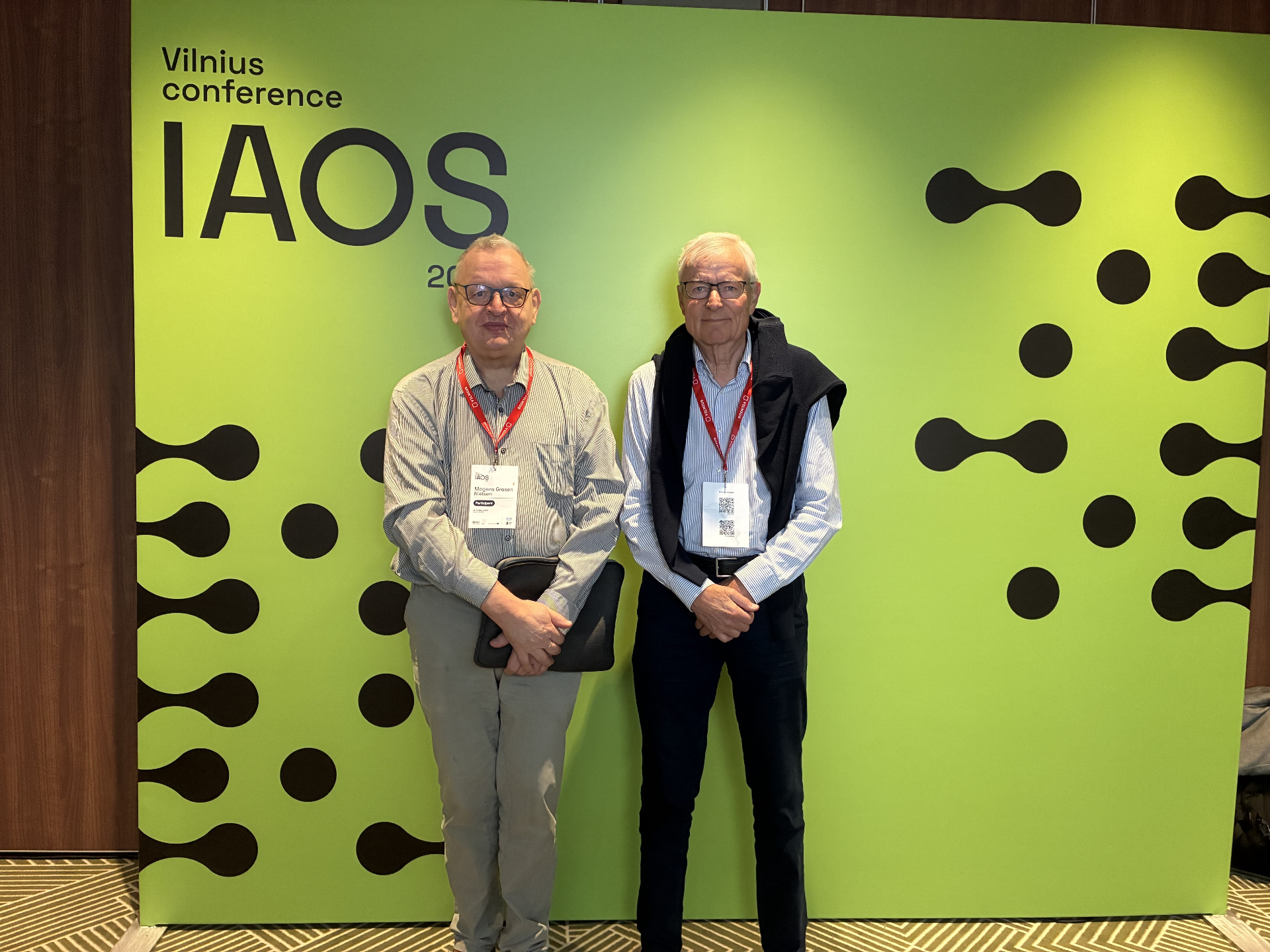
On 12–14 May 2026, I and Lars Thygesen contributed to the IAOS 2026 Conference in Vilnius, Lithuania — the global statistical conference of the International Association for Official Statistics (IAOS):
"Navigating the Data Revolution: Innovations and Impact in Modern Statistics."
First, we would like to thank the organisers and participants for an exceptional week of learning, presenting, and connecting with various experts.
At the conference we presented "From Standards to Practice: AI as a Communication Partner for Guided Problem Solving & Guided Learning."
Our presentation addressed a practical problem: official statistics has many standards — UN NQAF, ESS QAF, GSBPM, GAMSO, EU AI Act, statistical legislation and domain-specific standards — but organisations often struggle to turn them into daily practice, review procedures, decision briefs and organisational learning.
See details in the conference paper.
Two keynote speeches: AI is challenging official statistics
At IAOS, Mariana Kotzeva, Director-General of Eurostat, framed the problem focusing on the move from generative AI to agentic AI: AI systems that can act, reason, collaborate and execute sequences of tasks with less continuous human prompting. This raises a new question: can AI agents become "new digital colleagues" in statistical production teams?
AI agents may support many parts of statistical production, but Kotzeva was sceptical about whether it is wise to hand over control to them. The key issue is therefore not only productivity, but how to keep human responsibility, quality assurance, traceability and clear review duties in AI-supported workflows.
Steve MacFeely, Chief Statistician at the OECD, placed AI in a broader perspective framed by three revolutions: the digital revolution, the political revolution and the social revolution. He warned that official statistics now has to handle digital abundance, corporate data power, dataveillance and in particular AI-mediated interpretation and machines as users of statistics. Statistical offices must therefore defend context, uncertainty, methodology, trust, public value and democratic accountability.
Together, these contributions show that AI is not only a technical tool. It changes the conditions for trust, quality, responsibility, communication and legitimacy.
Our contribution: AI-CATCH as a communication partner
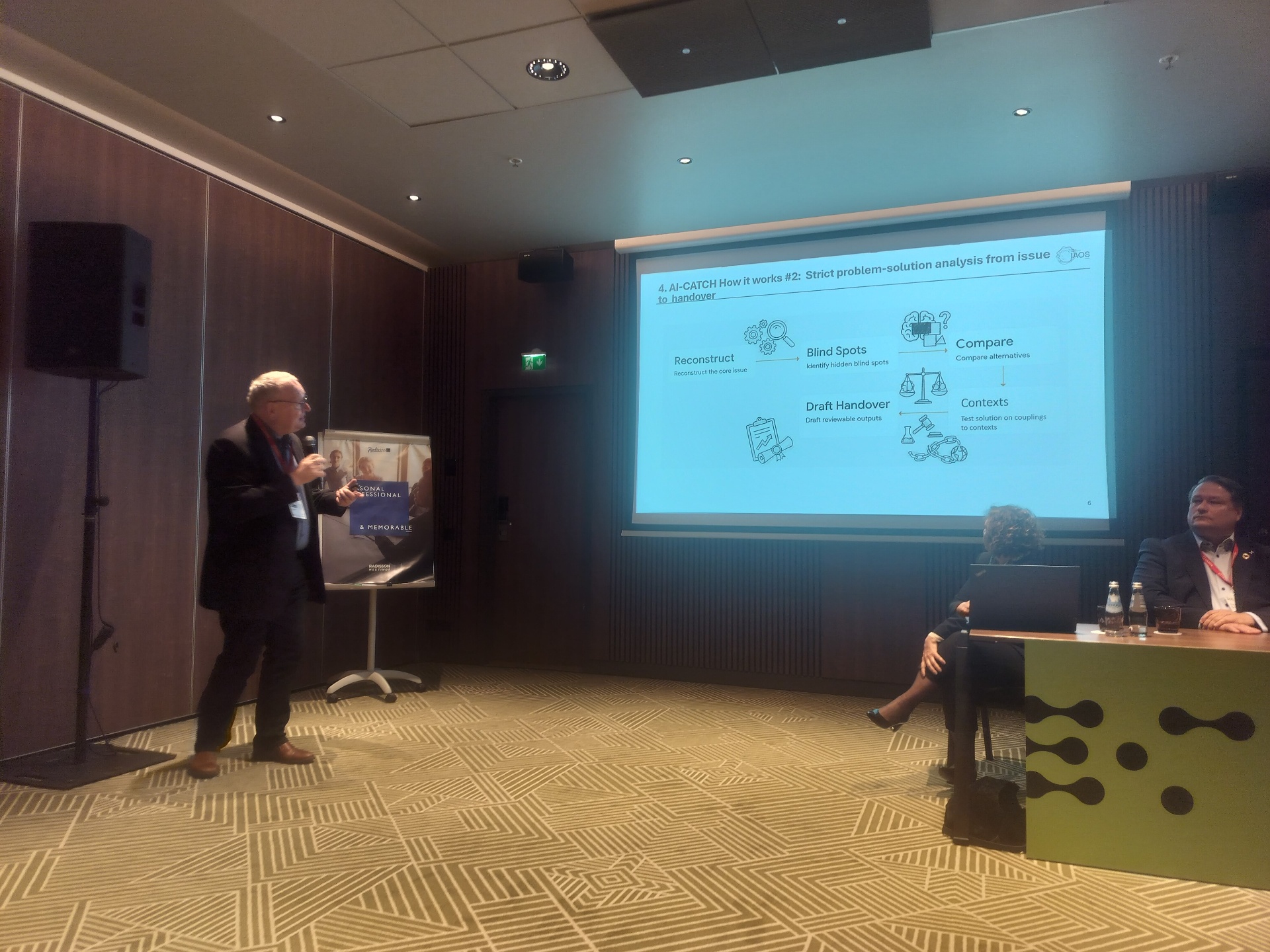
We have used AI ourselves when helping statistical organisations tackle change problems in areas such as register-based census, labour force statistics and the practical use of standards. Now we want to make this ability available through AI apps and courses.
The other starting point is a need for a sociological perspective on understanding of technology including AI, organisation and legitimacy. Find details in the paper "Generative AI in organisations – better and faster decision processes?" presented in April 2026 at Wolfson College at Cambridge University. See also LinkedIn post.
Our argument is simple: standards do not apply themselves. A framework may describe good practice, but it rarely tells a team exactly how to handle a late data source, a quality break, disclosure risk, an AI proposal or a conflict between timeliness and accuracy.
AI-CATCH treats AI not as an answer engine, but as a communication partner. It helps staff clarify problems, identify missing context, compare alternatives, connect issues to relevant standards and prepare reviewable outputs before decisions are made.
The process follows a chain of work situations: problem, draft, stakeholder dialogue, workshop, review and decision preparation. The draft is not the decision. It is a handover between work situations.
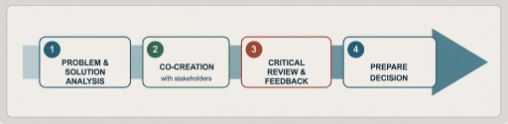
AI can produce (a lot of) text quickly, but speed does not create quality, legitimacy or trust. AI-CATCH supports preparation, not authorisation. It can produce issue statements, checklists, option comparisons, reviewer notes, decision briefs, work instructions, architecture drafts and app specifications — but responsibility remains with the organisation.
Organisation and AI in a wider perspective
Put into a wider perspective: better decisions should not mean replacing human decision makers with machines — whether in statistical offices or as extreme as Albania's Minister of State for Artificial Intelligence.
The more serious possibility is to redesign organisations so that augmented AI becomes part of the working interface itself for all. This includes working interfaces to AI used for automation. AI-CATCH points in that direction: not an AI that takes responsibility away from people, but an organisational communication layer that helps every task, review and decision become more explicit, better checked and more legitimate.
To help organisations move in this direction, Anthropic's recent free course AI Fluency: Framework & Foundations offers practical guidance on how people can describe tasks clearly, delegate to AI, judge outputs critically and take responsibility for what is finally used.
AI-CATCH applies this shift to organisational decision-making processes: it turns standards into practical guidance and makes AI a communication partner in everyday work. The purpose is not only to support better and faster decisions, but to make the decision process more explicit, reviewable and firmly anchored in human responsibility.
Conclusion and the next step
The main conclusion from IAOS 2026 is that official statistics needs more than AI tools. It needs organisational methods for using AI responsibly — keeping people and organisations in the steering seat while using AI to improve decision preparation.
Our next step is to pilot AI-CATCH with interested national statistical organisations and international partners. Pilots focus on guided interaction in concrete work situations. The backbone is a curated knowledge base of standards, guidelines, examples and domain-specific material—"domain packages" that connect general standards to practical concepts, data sources, quality risks and decisions in areas such as labour, business, population and environmental statistics and national accounts. Get more information at the webinar.